

Twelve12 Architecture + Interior Design
twelve12.design
Greg Elsner, AIA; Beth Halstenson, AIA; Lisa Antenucci
Shell Lake Cabin
Click here to tour this home virtually.
The virtual tour experience is exclusive to ticket holders through October 4, 2026. The virtual tour is included in all ticket types. If you purchased a ticket online, you will find the password in your ticket purchase confirmation email. The password is also on pages 5, 7, 8, 11–13, and 32 in the guidebook you receive during the in-person tour weekend.
Project Type: New Build
Sponsors: Dwell44 (windows)
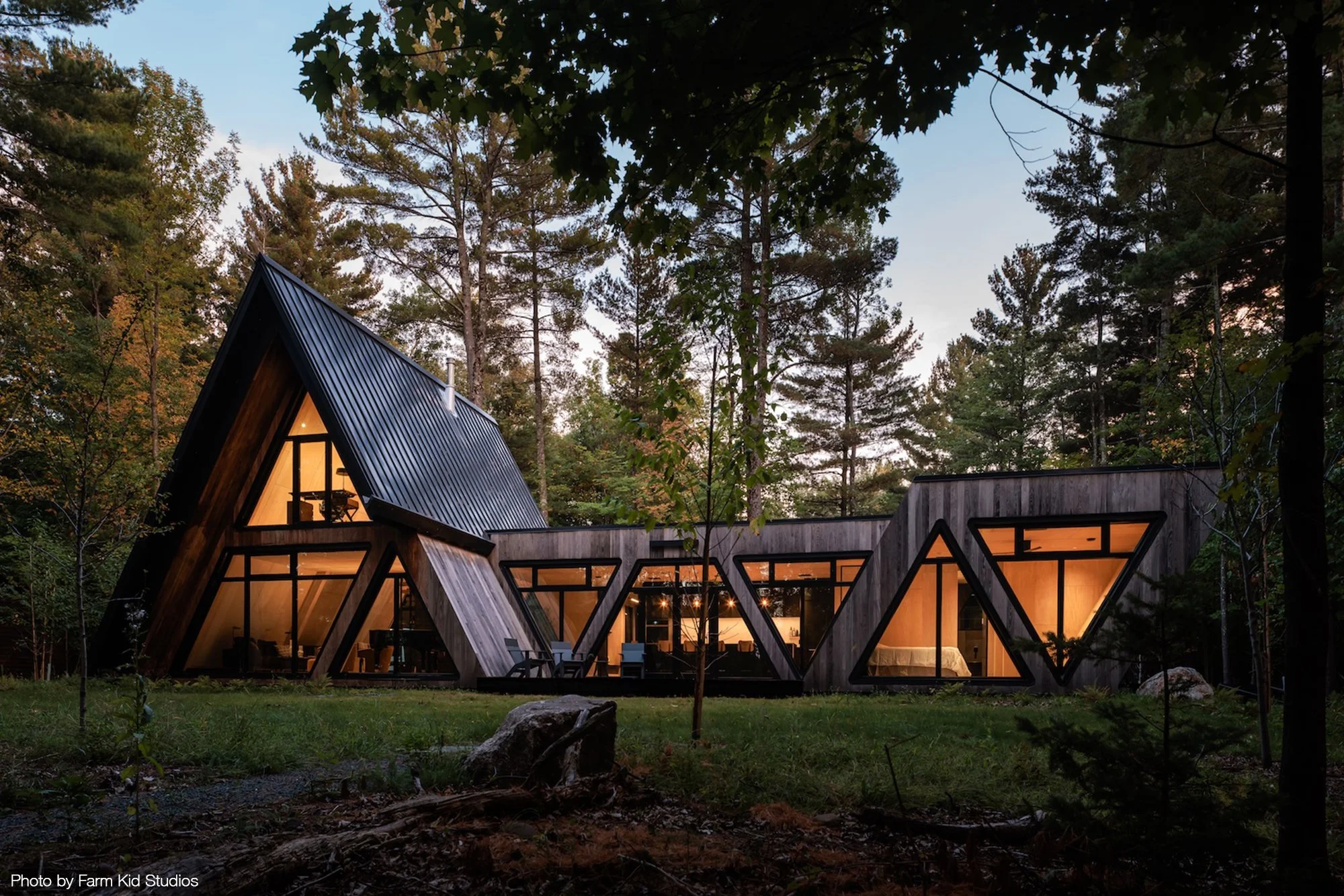
Set along the tranquil shores of Shell Lake, this personal sanctuary holds deep significance for the client, who spent summers at the nearby arts camp and later returned as an instructor. He envisioned a retreat that would honor the land and his connection to it through a design that was ecologically responsible, artfully crafted, and deeply rooted in place.
The resulting cabin is a modern interpretation of the classic A-frame, a form synonymous with American cabin culture. With laminated timber framing and minimalist detailing, the structure feels both grounded and elevated—evoking simplicity, elegance, and timelessness. The home’s modest footprint supports the client’s preference for compact living and underscores the project’s commitment to sustainability and universal design.
Carefully sited to preserve the landscape and maximize lake views, the cabin feels seamlessly integrated into its surroundings. Local sourcing and craftsmanship were also central to the process, from the milled-on-site white pine trees repurposed for interior finishes to the steelwork fabricated by regional artisans for the custom staircase.
Beyond aesthetics, the home exemplifies regenerative design through its alignment with the Living Building Challenge’s CORE Green certification. Materials were vetted for health and sustainability, and innovative systems like rainwater harvesting, solar panels, and an energy recovery ventilator work together to minimize the home’s environmental impact while enhancing comfort and performance.
The Shell Lake Cabin is more than a beautiful, high-performing retreat—it’s a quiet but powerful demonstration of how built structures can restore, honor, and give back to the land they occupy. Through its thoughtful design, this project offers a hopeful, replicable model for sustainable living rooted in craftsmanship, wellness, and place.
AIA Framework for Design Excellence: Design for Well-being
This project addresses many of the AIA Frameworks for Design Excellence in its approach to sustainability as a holistic concept, but Design for Well-Being is most explicitly demonstrated. The cabin is innately designed to be a place of refuge, restoration, and respite for the client. The health of all living things impacted by this building was considered, including those who designed it, built it, live in it, surround it, and learn from it.
The design promotes well-being for occupants through primarily one-level living through an open floor plan that promotes mobility, longevity, and future aging-in-place; excellent air quality achieved with a tight building envelope managed by an energy recovery ventilator (ERV); abundant access to natural light and views through intentional siting and window placement, which also creates a connection to place and nature; optimized thermal comfort through controlled solar heat gain, a geothermal heating and cooling system, and high- performance Roxul insulation, no-VOC, low-VOC, and Declare Labeled interior finishes, building materials, and furnishing selections that promote healthy air quality; and reduced exterior noise through a tight building envelope.
The design promotes well-being for the environment (site and community) through primarily one-level living and use of Universal Design principles (i.e., zero threshold entries) that accommodate a range of user abilities; landscape of native plants and vegetation that honors the history of the site and maintains its biodiversity; an appropriate scale that respects the context of the surrounding site and neighboring structures; and storage and support for travel by bicycle and canoe rather than car.
What is the AIA Framework for Design Excellence? Learn more »